
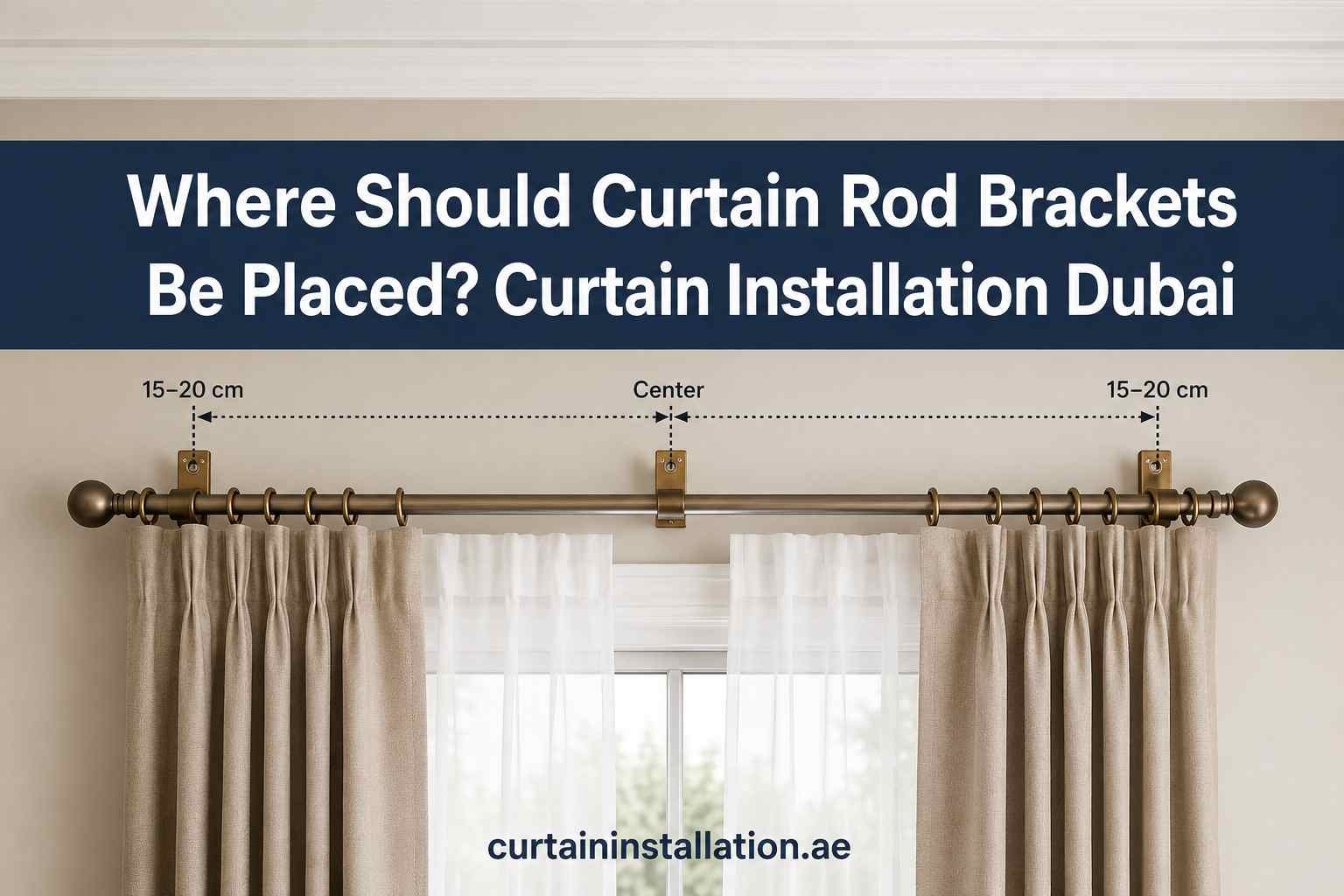
You’ve picked the perfect fabric, matched it flawlessly to your décor, and you’re finally ready to hang your curtains and then the rod sags in the middle, or sits crooked above the window. Nine times out of ten, the fabric isn’t to blame. It’s the Curtain Rod Brackets. Get their placement right, and even a plain curtain panel looks like it was made for that exact window. Get it wrong, and no amount of expensive fabric will fix the look.
At Curtain Installation Dubai, we hear this question almost every single day: “How high, how wide, and how many brackets do I actually need?” This guide answers all of it with real numbers, room-tested rules, and a few professional tricks most blogs leave out.
Curtain Rod Brackets: What They Actually Do
Before jumping into measurements, it helps to understand the job these small fittings are doing. Curtain Rod Brackets are the hardware pieces mounted to your wall, ceiling, or window frame that hold the rod (and the full weight of your curtains) in place. They’re often called “supports,” and depending on the hardware collection, they can be purely functional or fully decorative.
A bracket typically has three measurements worth knowing:
- Projection – how far the bracket extends the rod from the wall
- Clearance – the gap between the wall and the back of the rod
- Return – the distance between the wall and where the drapery fabric hangs
Understanding these terms makes it far easier to choose the right bracket for heavy blackout drapes versus lightweight sheers.
Bracket Height: How High Should You Mount Them?
This is the single most-searched question about curtain hardware, and the answer depends on your ceiling height and the mood you want.
| Situation | Recommended Height |
|---|---|
| Standard windows | 4–6 inches above the window frame |
| Dramatic, floor-length drapes | 8–12 inches above the frame |
| Low ceilings | 1–2 inches below the ceiling |
| High ceilings with crown molding | 3–4 inches below the molding |
Do You Know? Curtain Rod Sets: How to Choose the Best Curtain Rod Diameter?
As a general rule, mounting your brackets higher than the frame draws the eye upward and makes the ceiling feel taller a trick interior designers use constantly in smaller rooms. If your ceiling-to-window gap is between 6 and 12 inches, splitting the difference and mounting halfway usually looks most balanced.
Bracket Width: How Far Should They Extend From the Sides?
Height gets most of the attention, but width is just as important for how open and bright a room feels.
- Extend brackets 3 to 6 inches beyond each side of the window frame as a baseline
- For a fuller, more luxurious look, go 8 to 12 inches past the frame
- Wider placement lets curtains stack fully off the glass, so windows let in maximum daylight
Extending your Curtain Rod Brackets outward isn’t just about aesthetics — it directly affects how much natural light reaches your room once the curtains are opened. A window that’s boxed in tightly by close-set brackets will always look smaller than it actually is.
Adjusting Placement for Different Window Types
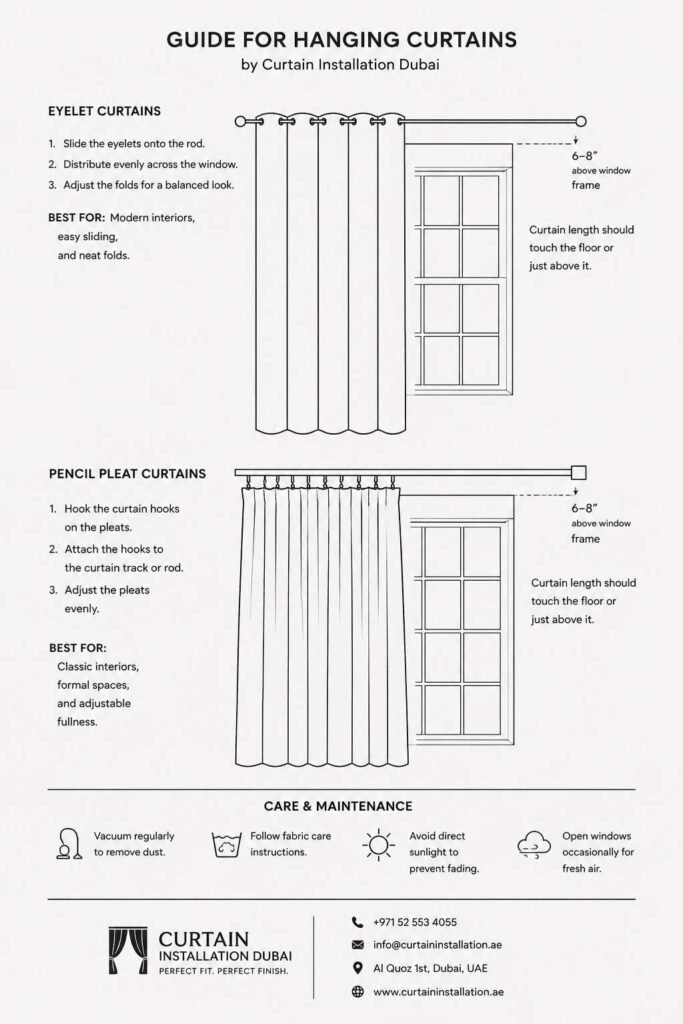
Not every window follows the standard rule book. Here’s how placement shifts for trickier layouts:
- Bay Windows – Each panel needs its own bracket set, often with angled swivel sockets to follow the curve of the wall
- Floor-to-Ceiling Windows – Mount as close to the ceiling as possible for a clean, uninterrupted drop
- Small Windows – Go wider than usual with your bracket spacing to visually stretch the window
- Arched Windows – Place brackets at the highest flat section above the curve so the rod sits level
Getting these special cases right is exactly the kind of detail that separates a DIY attempt from a professional finish — something our team at Curtain Installation Dubai handles daily across villas, apartments, and offices with unusual window shapes.
Supporting Longer Rods With Center Brackets
Rods longer than about 60 inches (roughly 1.5 meters) are prone to sagging without extra support in the middle.
- Add one center bracket for spans up to around 90–100 inches
- Use two evenly spaced center supports for heavier drapes or extra-long rods
- As a rule of thumb, deduct roughly 15 inches from the maximum safe span for every additional 5 lbs of curtain weight
If you’re working with a heavy rod diameter and layered fabric — say, a blackout panel behind a sheer — check the manufacturer’s maximum span rating before finalizing your bracket count. This one step alone prevents most mid-rod sagging complaints.
Choosing the Right Bracket Style
The bracket you pick should match both your curtain layers and your room’s style:
- Single Brackets – Best for one layer of curtains
- Double Brackets – Ideal when layering sheer and blackout panels together
- Ceiling-Mount Brackets – A strong choice for tall windows or walls without enough space for wall mounting
If you’re unsure which style suits your hardware collection, working with established Curtain Rods Companies in your area can save you from mismatched or unstable installations, especially for heavier drapery systems.
Why Material Choice Affects Long-Term Performance
Bracket placement matters, but the material you choose determines how well that placement holds up over time. Unlacquered brass, for example, is prized for a reason:
- Develops a warm, natural patina as it ages
- Resists corrosion better than painted or plated alternatives
- Pairs well with both classic linen drapes and modern velvet curtains
Stronger materials also hold their shape better under the ongoing weight of daily opening and closing, which means less chance of brackets loosening or rods bowing after a year or two.
Caring for Your Curtain Hardware
A little maintenance keeps brackets performing and looking their best for years:
- Dust brackets and rods regularly to prevent buildup that can affect movement
- Check screws and wall anchors every few months, especially with heavier curtains
- Avoid harsh chemical cleaners on brass or metal finishes; a soft, dry cloth is usually enough
- Re-tighten center supports periodically on long rods to prevent gradual sagging
Common Bracket Placement Mistakes to Avoid
Even premium hardware underperforms when installed incorrectly. Watch out for:
- Mounting brackets too close to the frame, which makes windows look cramped
- Setting the rod too low, which shortens the room’s perceived height
- Skipping a center bracket on long spans, leading to visible sagging
- Using weak wall anchors that can’t handle the curtain’s weight over time
Tools You’ll Need Before You Start
Having everything ready before you pick up the drill saves time and prevents crooked holes:
- Tape measure and pencil
- Spirit level
- Drill with the correct bit size for your wall anchors
- Screwdriver
- Wall anchors suited to your wall type (drywall, plaster, or brick)
Step-by-Step Installation Guide
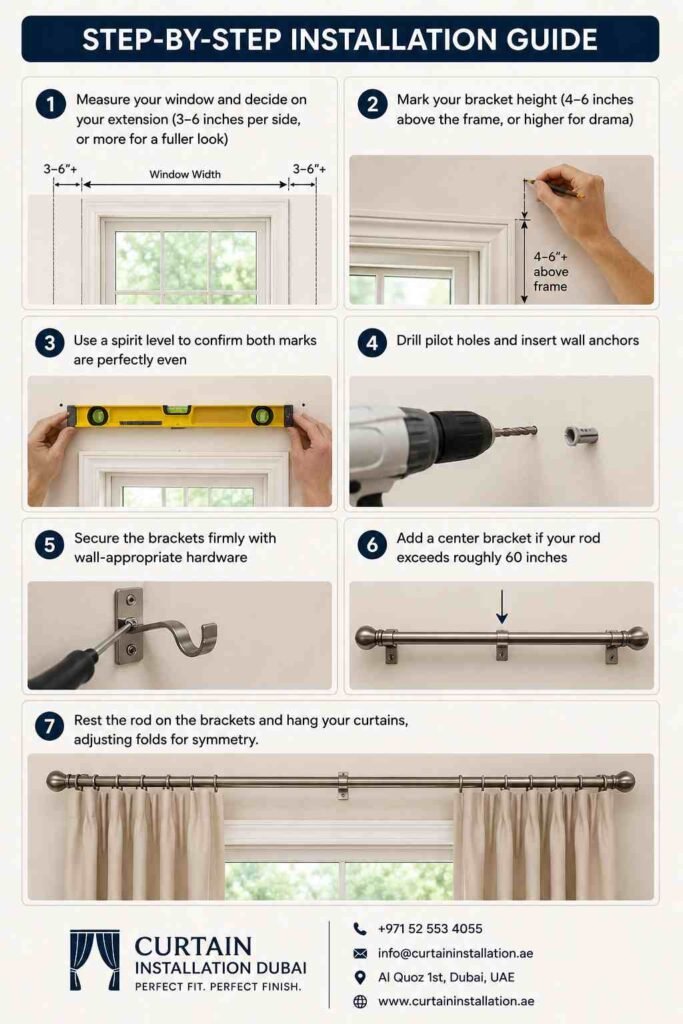
- Measure your window and decide on your extension (3–6 inches per side, or more for a fuller look)
- Mark your bracket height (4–6 inches above the frame, or higher for drama)
- Use a spirit level to confirm both marks are perfectly even
- Drill pilot holes and insert wall anchors
- Secure the brackets firmly with wall-appropriate hardware
- Add a center bracket if your rod exceeds roughly 60 inches
- Rest the rod on the brackets and hang your curtains, adjusting folds for symmetry.
FAQs About Curtain Rod Brackets
How high above the window should curtain rod brackets be placed?
For most rooms, 4–6 inches above the frame works well; go higher for a dramatic, ceiling-height effect.
How far should brackets extend past the window frame?
Extend brackets 3–6 inches on each side as a minimum, or up to 12 inches for a fuller, brighter look.
Do I need a center bracket for my curtain rod?
Yes, if your rod is longer than about 60 inches or carrying heavy fabric, a center support prevents sagging.
What’s the best bracket material for long-term use?
Unlacquered brass is a popular choice because it resists corrosion and develops an attractive patina over time.
Can bracket placement really make a window look bigger?
Yes, mounting brackets higher and wider than the frame creates an optical illusion of a taller, wider window.
Final Thoughts
Correct Curtain Rod Brackets placement is the difference between curtains that merely hang and curtains that transform a room. From getting the height and width right to choosing sturdy, well-matched hardware, every small decision adds up to a polished, professional finish.
At Curtain Installation Dubai, we combine precise measurements with premium hardware to make sure your windows look as good as the day they were installed — and stay that way for years to come.