
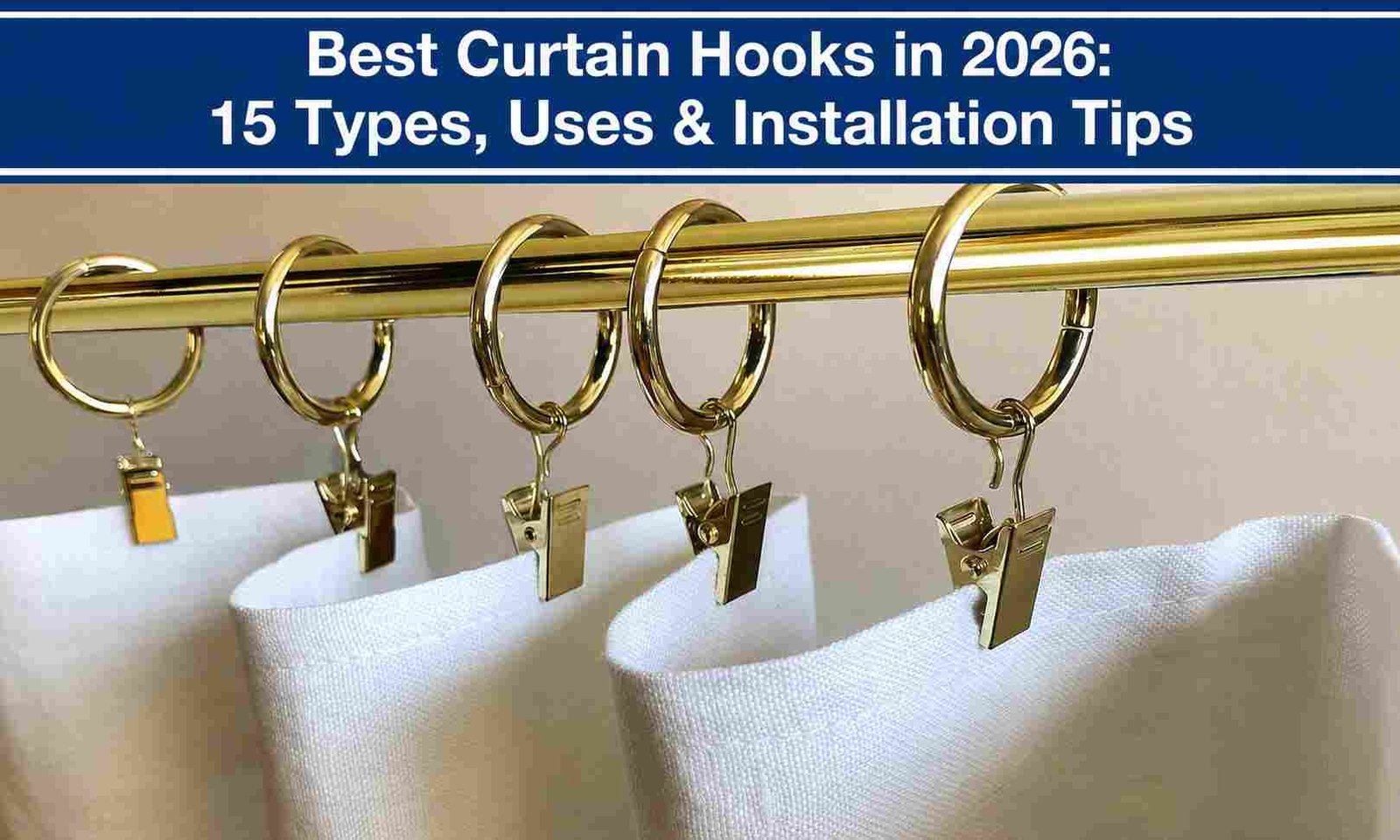
Curtains can make or break a room. But most homeowners forget one small detail that decides how those curtains actually look and last: the hooks holding them up.
The right curtain hooks change everything. They affect how smoothly your curtains glide, how neat the folds look, and how long the fabric stays in shape. Pick the wrong ones, and even the most beautiful drapery will sag, snag, or hang unevenly within months.
This guide walks you through every major type of curtain hook available in 2026. You will learn what each hook does, where it works best, and how to choose the right one for your windows, your curtain style, and your home.
What Are Curtain Hooks?
Curtain hooks are small hardware pieces that connect your curtain fabric to a track or rod. They sit at the top of the curtain and carry its full weight while allowing smooth movement across the window.
Think of them as the quiet workers behind every well-dressed window. You barely notice them, but without them, your curtains would not hang, glide, or fold properly at all.
Why Curtain Hooks Matter
A curtain is only as good as the hardware holding it up. Curtain hooks control how fabric drapes, how folds form, and how easily you can open and close your curtains every day.
Cheap or mismatched hooks cause real problems. Curtains sag in the middle, tracks jam, and fabric wears out faster than it should.
Good hooks also protect your investment. If you have spent money on linen, velvet, or blackout fabric, the right curtain hardware makes sure that fabric hangs the way it was designed to.
Different Parts of a Curtain Hanging System
Before picking hooks, it helps to understand the full system they work with. A typical setup includes:
- Curtain rod or curtain track – the bar or channel the curtain moves along
- Curtain rings or gliders – connectors that ride along the rod or track
- Curtain hooks or pins – the pieces attached to the fabric itself
- Curtain tape – sewn into the fabric top to hold pleats and hooks in place
- Brackets and finials – hardware that mounts the rod to the wall
Each part works together. Choosing curtain hooks without matching them to your track or rod is one of the most common mistakes homeowners make.
15 Best Types of Curtain Hooks
Here is a complete breakdown of the most popular types of curtain hooks used in homes and offices today.
1. Pin Hooks
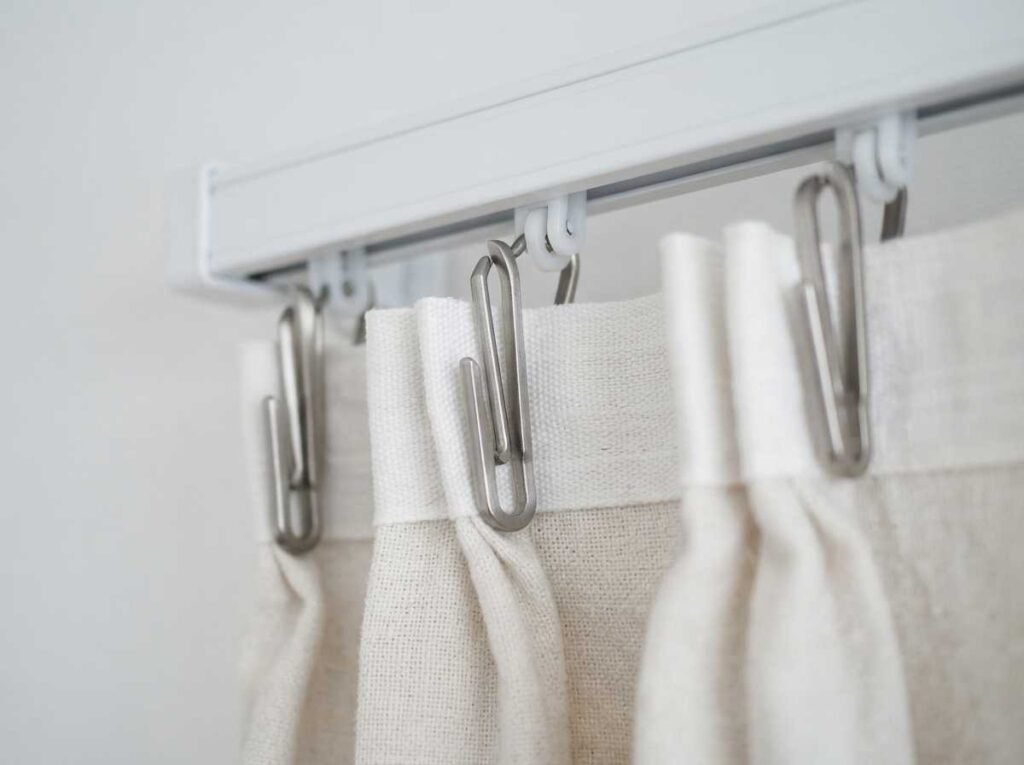
Pin hooks are small metal or plastic pins with a curved or straight tip. You insert them directly into curtain tape at the back of the fabric.
They work by hooking onto rings or gliders on your track, holding the fabric securely while letting it move freely. The pin sits hidden behind the curtain, so it barely shows from the front.
Best use cases: Pinch pleat curtains, formal living rooms, and curtains that use curtain tape headings.
Advantages: Easy to insert and remove, affordable, and widely available in different sizes.
Ideal locations: Living rooms, bedrooms, and dining areas where a tailored, structured look matters.
Installation tip: Push the pin straight into the tape pocket rather than at an angle. This prevents the tape from tearing over time.
2. Pleater Hooks
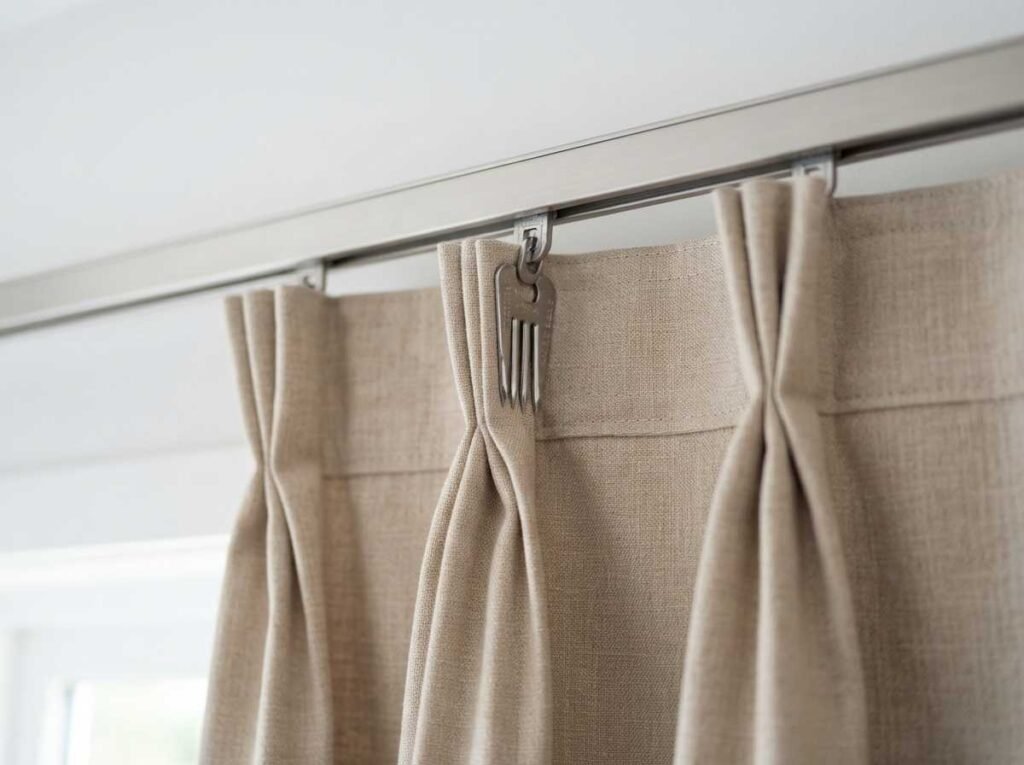
Pleater hooks, also called four-prong or multi-prong hooks, create pinch pleats without needing pre-sewn pleat tape. The prongs pierce through the fabric and curl to form even, structured folds.
This makes them a favorite for custom draperies where you want full control over pleat spacing and depth.
Best use cases: Custom-made curtains, pinch pleat styles, and heavier drapery fabrics.
Advantages: Creates crisp, professional-looking pleats and allows adjustable fold width.
Ideal locations: Formal dining rooms and living spaces with tall or wide windows.
Installation tip: Space pleater hooks evenly, usually four to five inches apart, for a balanced pleat pattern.
3. S Hooks
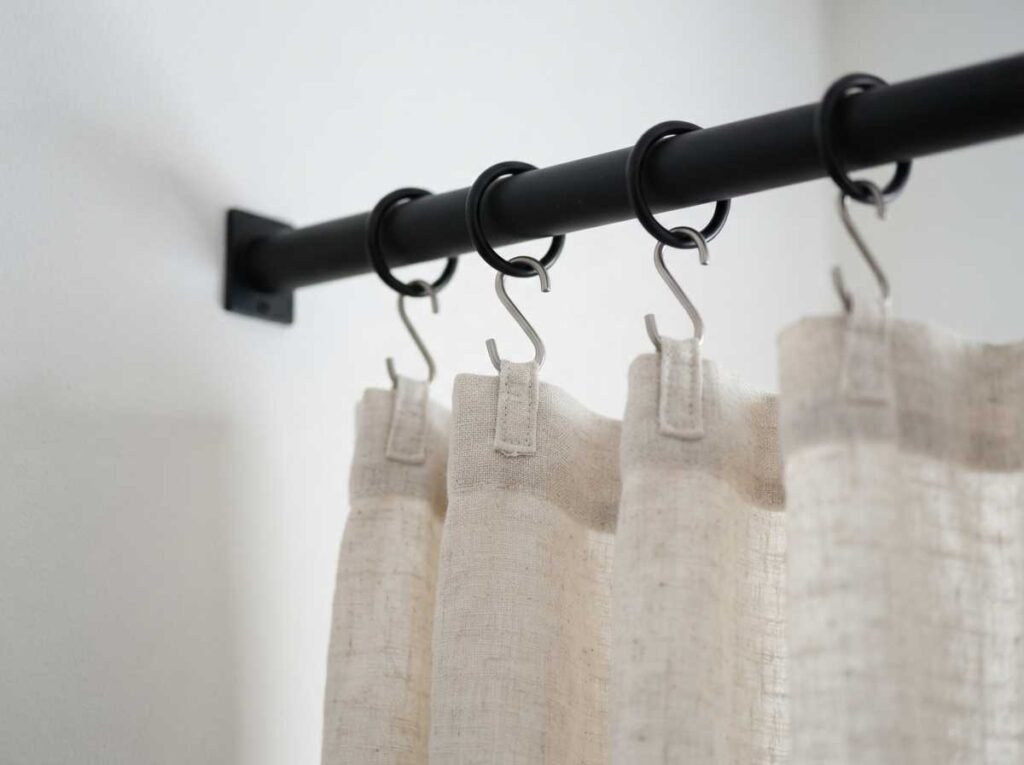
S hooks, shaped exactly like the letter, are one of the simplest curtain hanging accessories available. One end hooks into the curtain eyelet or tape, and the other end hooks onto the curtain ring.
They are lightweight and quick to attach, making them popular for simple, casual curtain setups.
Best use cases: Lightweight curtains, café-style windows, and budget-friendly setups.
Advantages: Cheap, easy to swap out, and simple to install without tools.
Ideal locations: Kitchens, guest rooms, and rental apartments.
Installation tip: Choose a slightly heavier gauge S hook for curtains with any real weight, since thin ones can bend.
4. Clip Rings
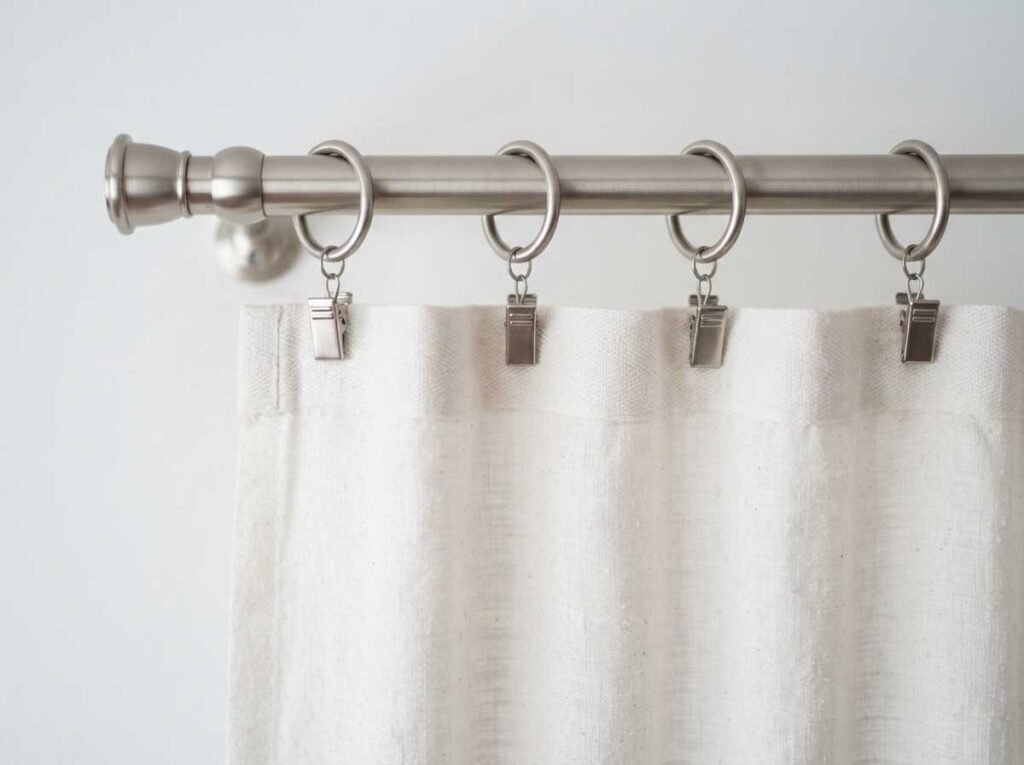
Clip ring curtain hooks combine a metal ring with a small clip at the bottom. The clip grips the top edge of the curtain fabric directly, with no sewing or tape required.
This makes them one of the fastest curtain hardware options to install, since the fabric simply clips on.
Best use cases: Ready-made curtains, casual interiors, and lightweight to medium-weight fabrics.
Advantages: No sewing needed, easy to attach, and gives curtains a relaxed, gathered look.
Ideal locations: Sunrooms, home offices, and casual living areas.
Installation tip: Clip evenly along the top edge, keeping equal spacing so the fabric folds gather uniformly.
5. Eyelet Hooks
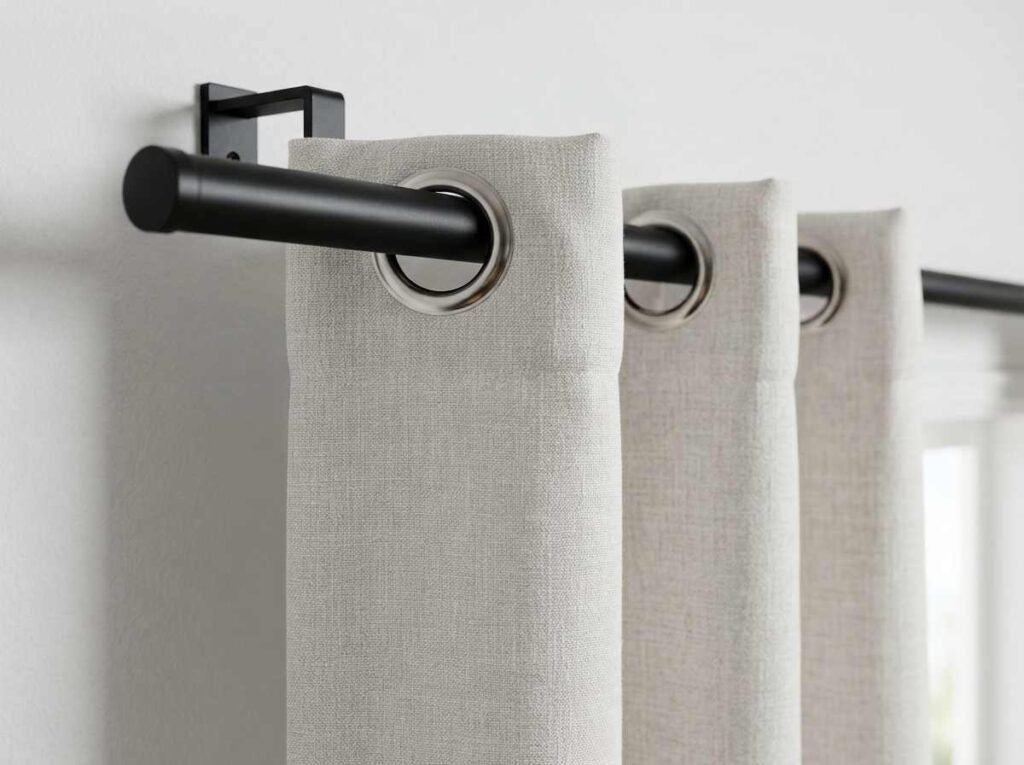
Eyelet curtains already have metal or plastic rings sewn into the fabric top, so the rod passes directly through them. Some styles still use small connector hooks to link the eyelet to a track system.
The result is a clean, modern look with soft, rounded folds.
Best use cases: Contemporary and minimalist interiors, especially with metal rods.
Advantages: Sleek appearance, smooth gliding, and no visible hardware.
Ideal locations: Living rooms, bedrooms, and modern apartments with statement rods.
Installation tip: Choose a rod diameter that matches your eyelet size closely, so the curtain does not bunch or hang loose.
6. Plastic Curtain Hooks
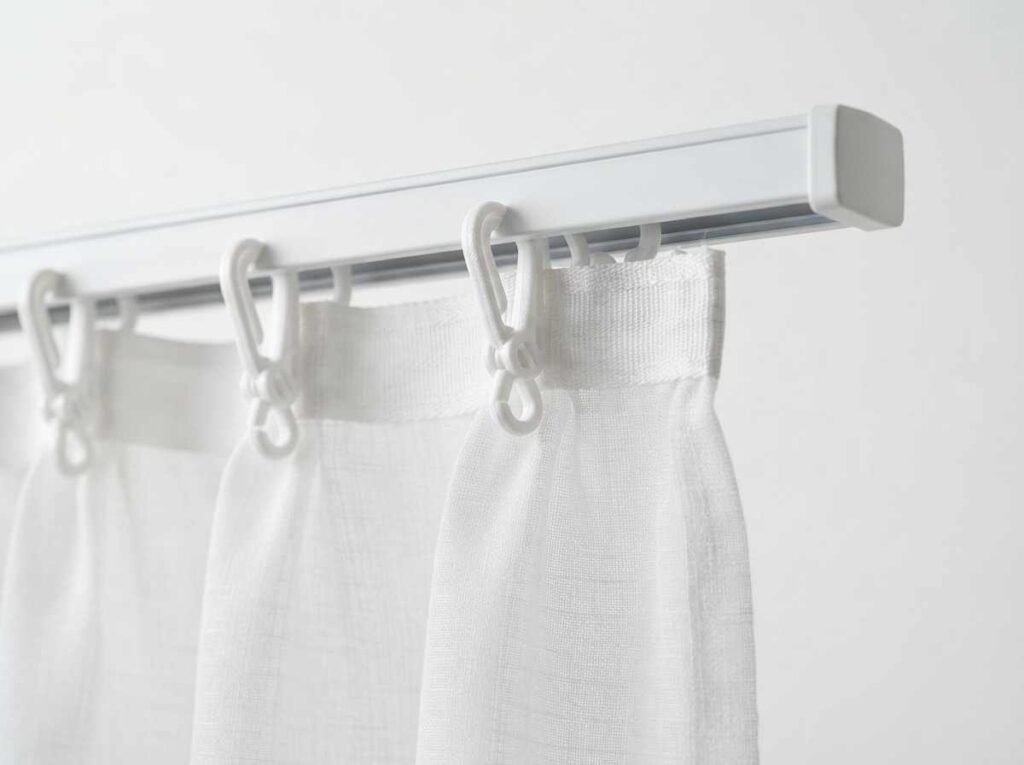
Plastic curtain hooks are lightweight, affordable, and available in many shapes, including pins, S hooks, and clips. They work well for everyday curtains that do not carry heavy fabric.
They resist rust, which makes them a practical choice in humid spaces.
Best use cases: Sheer curtains, lightweight cotton, and budget curtain projects.
Advantages: Low cost, rust-resistant, and available in many colors and sizes.
Ideal locations: Bathrooms, kitchens, and children’s rooms.
Installation tip: Avoid using plastic hooks with heavy velvet or blackout fabric, since they can crack under weight over time.
7. Metal Curtain Hooks
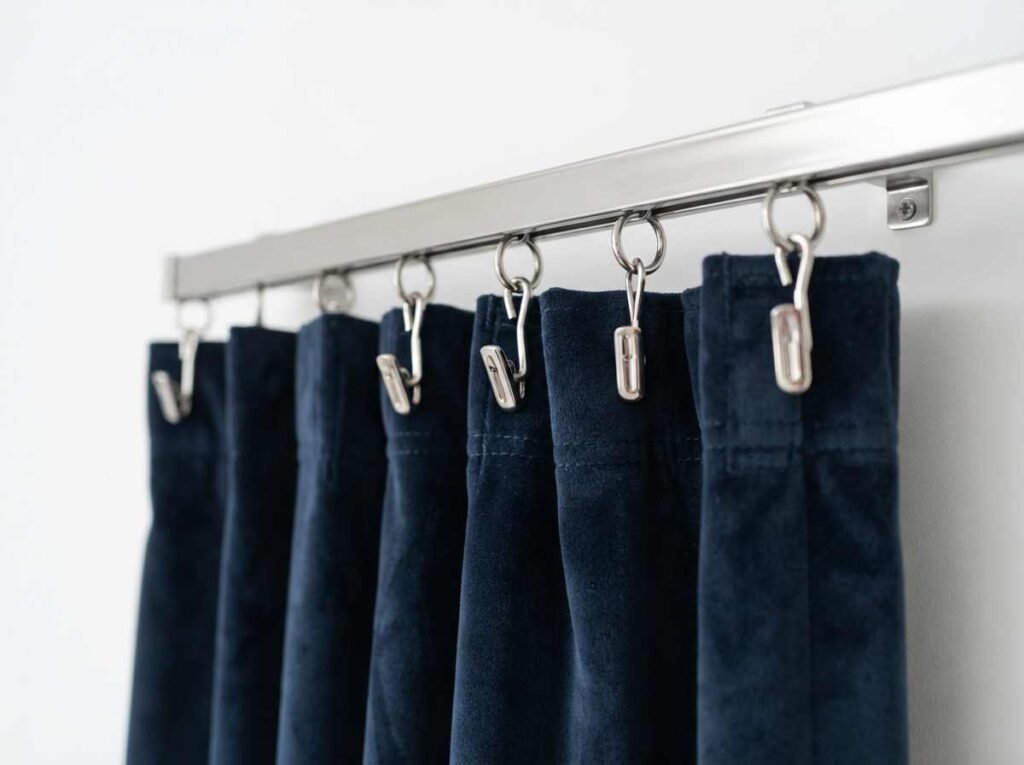
Metal curtain hooks are built for strength. Made from steel, brass, or aluminum, they handle heavier fabrics and daily use without bending or breaking.
They often come with a polished or matte finish, adding a subtle decorative touch.
Best use cases: Velvet, thermal, and blackout curtains that carry real weight.
Advantages: Long-lasting, strong load capacity, and a more premium finish.
Ideal locations: Living rooms, master bedrooms, and offices with heavier drapery.
Installation tip: Check the finish matches your rod or track hardware for a cohesive, finished look.
8. Traverse Rod Hooks
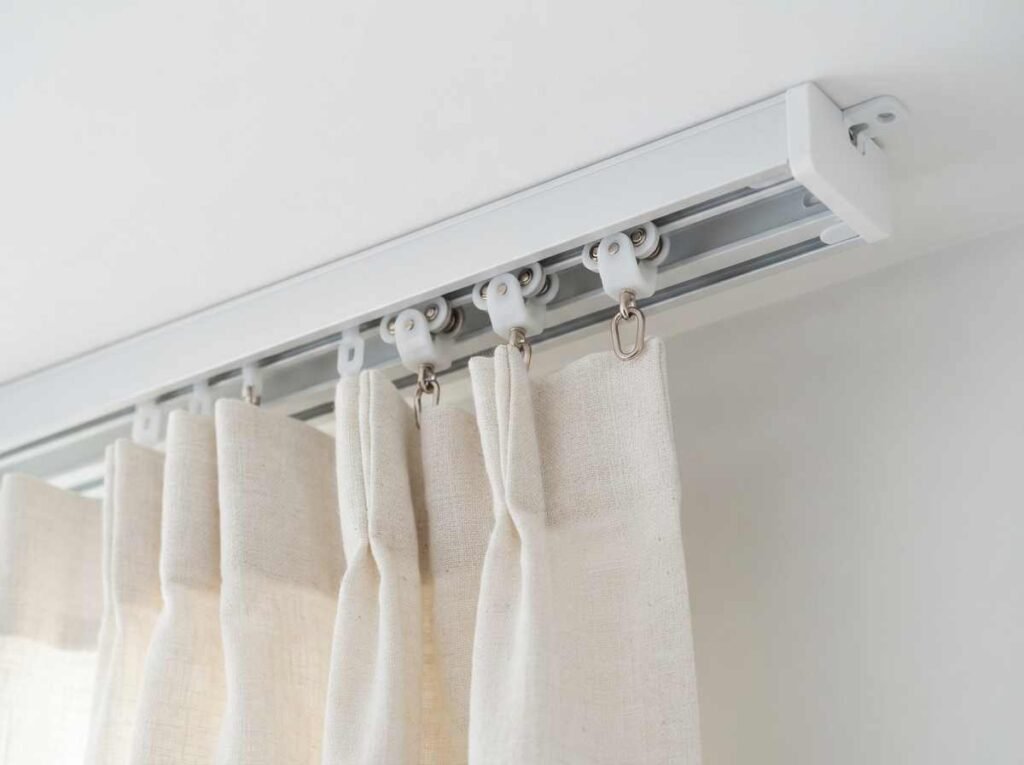
Traverse rod hooks, sometimes called curtain rail hooks, are designed specifically for traverse rods with a pulley or cord system. They connect to carriers that slide along the rod when you pull the cord.
This setup lets you open and close curtains smoothly without touching the fabric directly.
Best use cases: Motorized curtains, wide windows, and hard-to-reach curtain setups.
Advantages: Smooth, cord-operated movement and reduced fabric handling.
Ideal locations: Large living rooms, media rooms, and luxury villas with oversized windows.
Installation tip: Test the pulley system before final installation to confirm the carriers move without sticking.
9. Ripple Fold Hooks
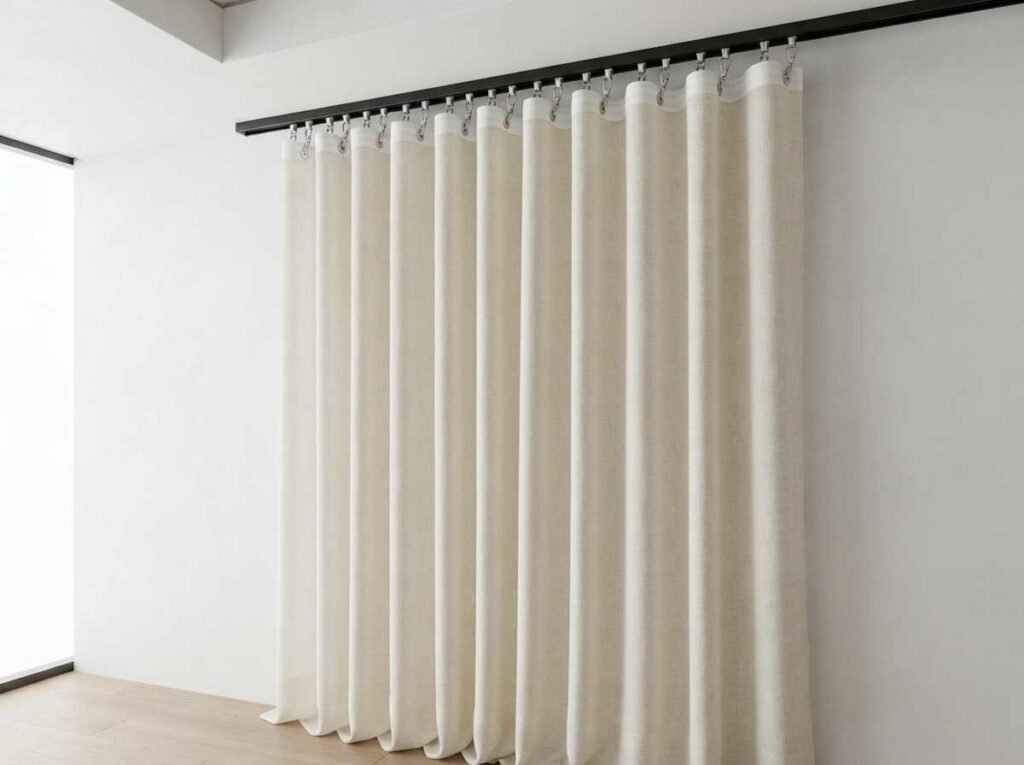
Ripple fold curtain hooks create smooth, even S-shaped waves across the entire curtain width. Snap tape sewn into the fabric back connects directly to carriers on a specialized track.
This heading style has become extremely popular for its clean, tailored appearance.
Best use cases: Modern homes, floor-to-ceiling windows, and open-plan living spaces.
Advantages: Consistent wave pattern, minimal stacking space, and a high-end finish.
Ideal locations: Contemporary villas, apartments, and commercial interiors.
Installation tip: Ripple fold systems need a compatible track, so measure and order the hooks and track together.
10. Wave Curtain Hooks
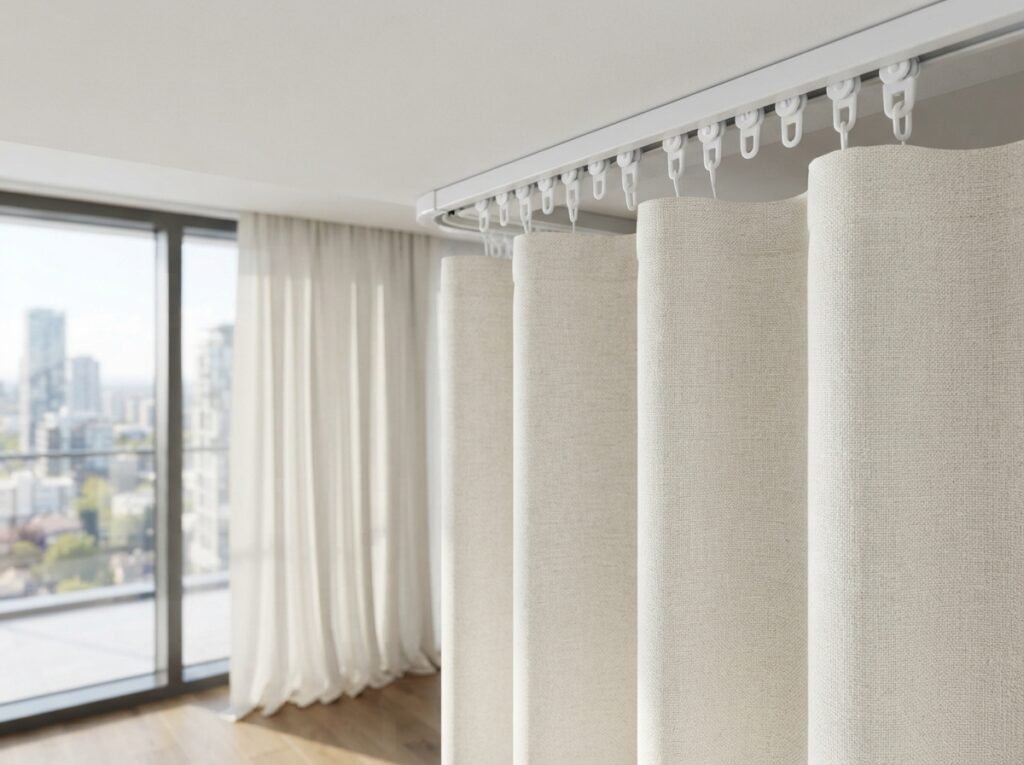
Wave curtain hooks work similarly to ripple fold systems but often use a slightly different carrier and tape design. They produce soft, rolling waves that move gracefully when the curtain opens.
Many premium wave curtains use this heading for a designer-level finish.
Best use cases: Statement windows, luxury interiors, and spaces with natural light features.
Advantages: Elegant movement, uniform folds, and a soft, flowing look.
Ideal locations: Master bedrooms, formal lounges, and hotel-style interiors.
Installation tip: Always pair wave hooks with a matching wave track for the correct spacing between carriers.
11. Hidden Curtain Hooks
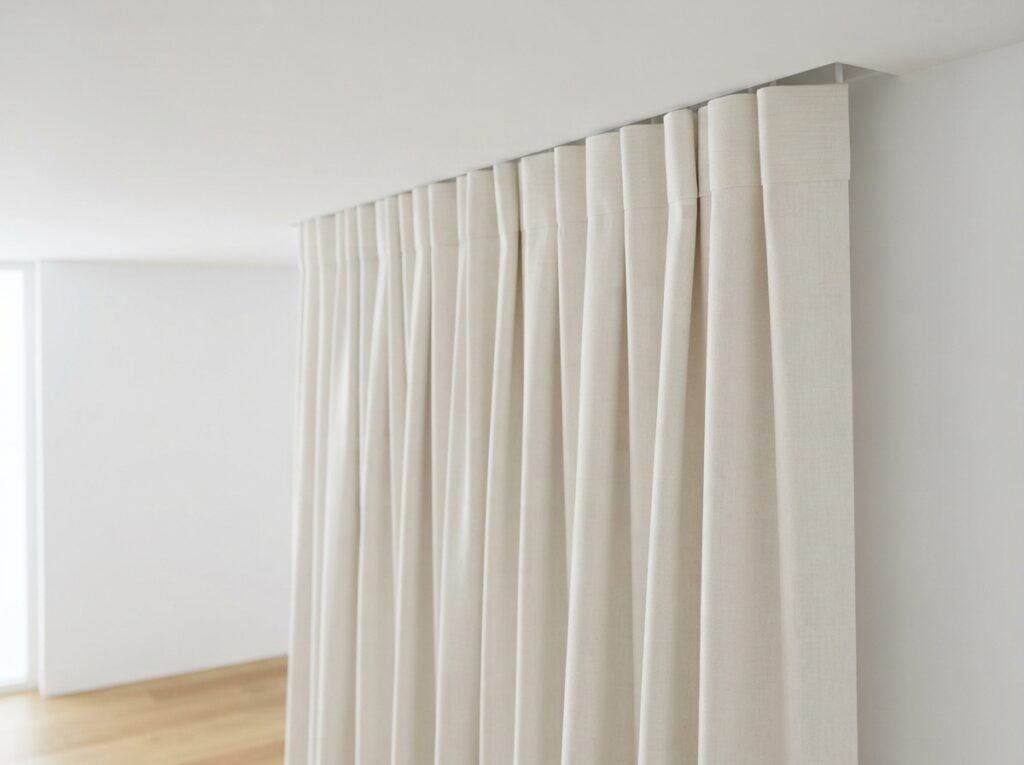
Hidden curtain hooks sit behind the fabric so no hardware shows from the front. They are common in ripple fold and wave systems, where the goal is a clean, uninterrupted fabric surface.
This style suits homeowners who want a minimalist, hotel-inspired window treatment.
Best use cases: Modern minimalist interiors and spaces where visible hardware feels cluttered.
Advantages: Clean, seamless appearance and a high-end, tailored finish.
Ideal locations: Living rooms, bedrooms, and open-concept apartments.
Installation tip: Check the fabric weight can support the hidden hook system, since thin fabric may not hold its shape well.
12. Adjustable Curtain Hooks
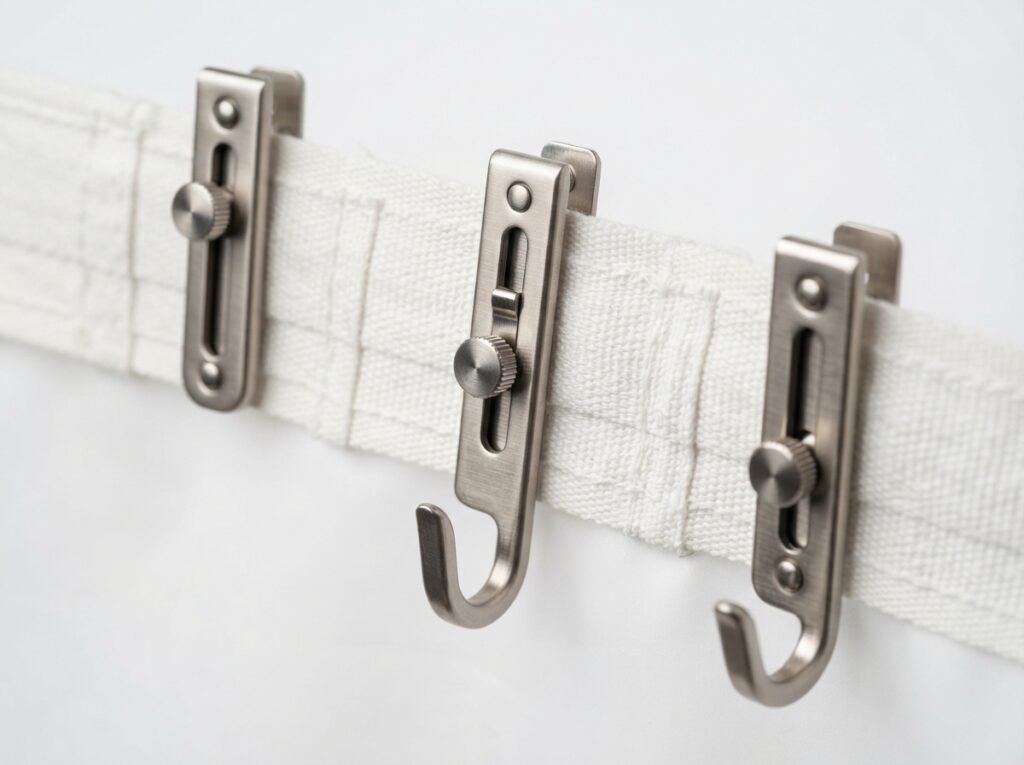
Adjustable curtain hooks let you change the curtain length or drop after installation. They usually feature a sliding or twist mechanism that raises or lowers the fabric slightly.
This flexibility is useful when curtains are slightly too long or short for a window.
Best use cases: Rental homes, new curtain installations, and windows with uneven drops.
Advantages: Fine-tunes curtain length without re-sewing and saves on tailoring costs.
Ideal locations: Any room where curtain length needs small corrections.
Installation tip: Adjust all hooks evenly across the width to keep the hem line straight.
13. Magnetic Curtain Hooks
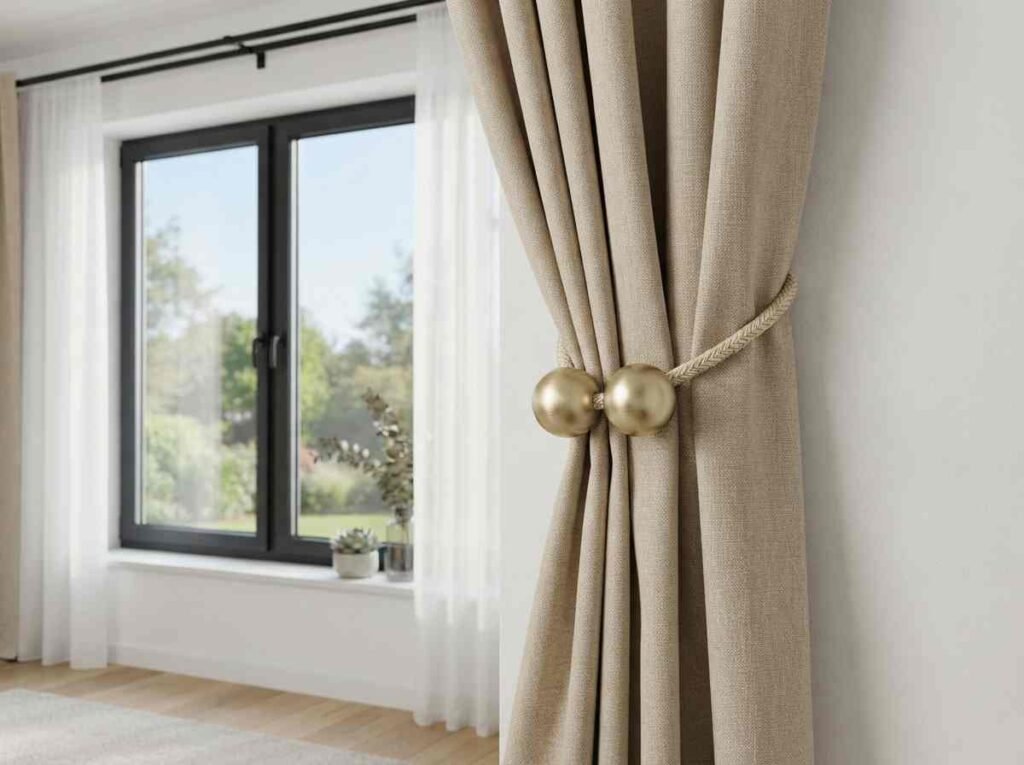
Magnetic curtain hooks use magnets instead of physical clips or pins. They are mostly used for holding curtains open, known as tiebacks, rather than for hanging the curtain itself.
They offer a tool-free, damage-free way to style your window treatment.
Best use cases: Curtain tiebacks, temporary styling, and rental properties.
Advantages: No drilling, easy to reposition, and gentle on delicate fabric.
Ideal locations: Bedrooms, nurseries, and any space where wall damage should be avoided.
Installation tip: Choose a strong magnet strength for heavier curtains, so the tieback holds securely throughout the day.
14. Adhesive Curtain Hooks
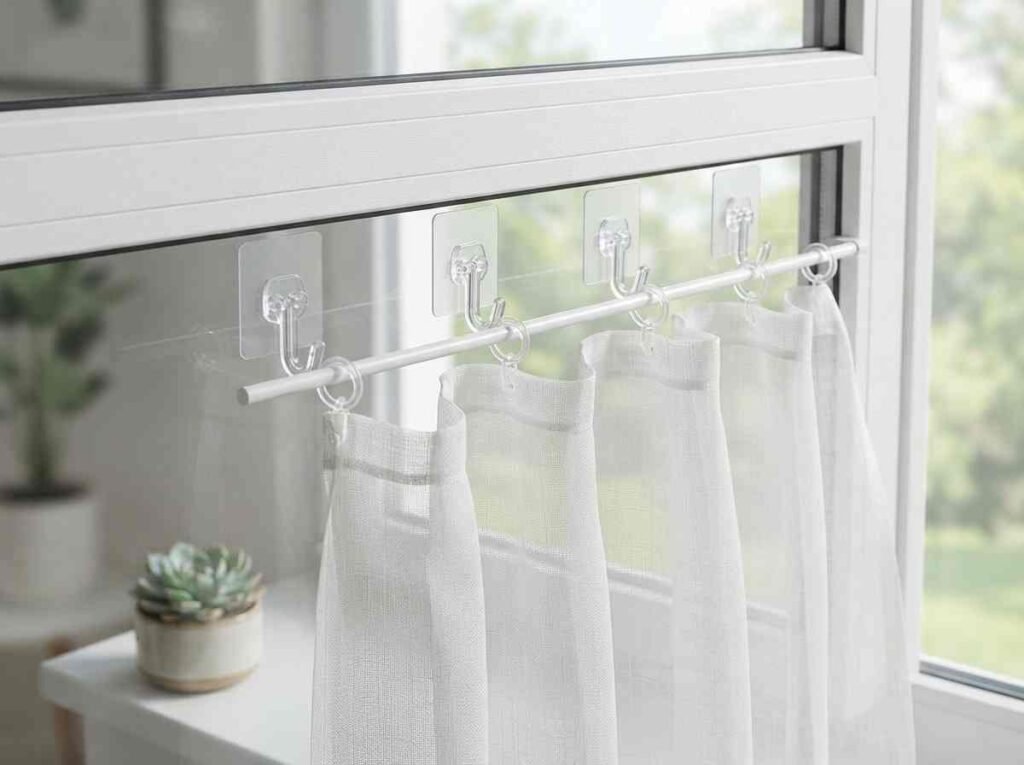
Adhesive curtain hooks stick directly onto walls, glass, or window frames without drilling. They work well for lightweight curtains or temporary window coverings.
They are a practical solution for renters who cannot make permanent changes to walls.
Best use cases: Rental apartments, temporary curtains, and lightweight sheer panels.
Advantages: No tools needed, easy to remove, and wall-friendly.
Ideal locations: Studio apartments, guest rooms, and short-term rental properties.
Installation tip: Clean the surface thoroughly before sticking the hook for a stronger, longer-lasting hold.
15. Shower Curtain Hooks
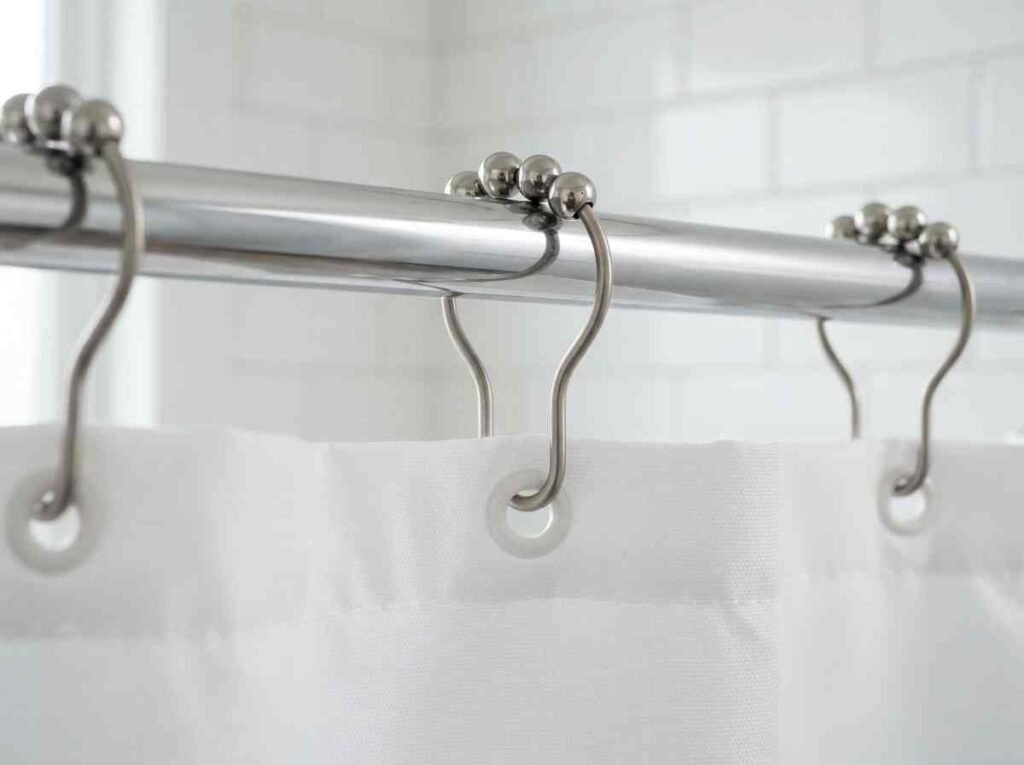
Shower curtain hooks are a specialized category built to handle moisture and daily use. They clip through the curtain’s grommets and slide along a shower rod.
Many modern versions include rollers for smoother gliding, even in tight bathroom spaces.
Best use cases: Bathrooms, en-suite showers, and family homes with frequent curtain use.
Advantages: Water-resistant materials, smooth gliding, and easy one-hand operation.
Ideal locations: Family bathrooms, guest bathrooms, and hotel-style en-suites.
Installation tip: Choose rust-proof metal or coated plastic hooks to handle daily moisture exposure.
Plastic vs Metal Curtain Hooks
Choosing between plastic and metal often comes down to curtain weight and how long you want the hardware to last.
Plastic Curtain Hooks
Plastic curtain hooks are light, budget-friendly, and rust-resistant. They suit sheer curtains, cotton panels, and everyday use in low-humidity rooms.
They are not built for heavy fabric, though. Over time, plastic can crack or wear thin under constant pulling and weight.
Metal Curtain Hooks
Metal curtain hooks offer more strength and a longer lifespan. They handle velvet, blackout, and thermal curtains without bending, and they hold up well to daily opening and closing.
The trade-off is a slightly higher cost. For most homeowners, though, the extra durability makes metal hooks worth the investment on heavier drapery.
How to Choose the Right Curtain Hooks
Picking the right curtain hook types is not complicated once you break it into a few simple factors.
Curtain Weight
Heavier fabrics like velvet and blackout curtains need heavy duty curtain hooks, usually metal. Lightweight sheers and cottons can use plastic hooks without any issue.
Curtain Style
Pinch pleats need pleater or pin hooks. Wave and ripple fold curtains need matching wave or ripple fold hooks. Eyelet curtains often skip hooks altogether, since the rod passes through the fabric directly.
Curtain Track or Rod
Not every hook fits every track. Curtain track hooks and curtain rod hooks are often designed differently, so always check compatibility before buying.
Room Type
Bathrooms need moisture-resistant hooks. Living rooms benefit from decorative, visible hardware. Bedrooms often look best with hidden or pin hooks for a clean finish.
Ease of Installation
If you want a quick, no-tools setup, clip rings or adhesive hooks work well. For a tailored, custom look, pleater or pin hooks with proper curtain tape give better results.
Budget
Plastic and S hooks cost less upfront. Metal, ripple fold, and wave systems cost more but last longer and give a more polished finish.
Which Curtain Hooks Are Best for Different Curtain Styles?
Sheer Curtains
Lightweight sheer curtains pair well with plastic clip rings or small pin hooks. Since the fabric is light, there is no need for heavy-duty hardware.
Blackout Curtains Dubai
Blackout curtains carry more weight, so metal pin hooks or pleater hooks work best. They support the thicker lining without sagging over time.
Wave Curtains Dubai
Wave curtains need a dedicated wave hook and track system. Using standard hooks will not produce the smooth, even wave pattern this style is known for.
Pinch Pleat Curtains
Pinch pleat curtains rely on pin or pleater hooks inserted into curtain tape. This combination creates the structured, tailored folds this heading style is famous for.
Eyelet Curtains Dubai
Eyelet curtains usually need no hooks at all, since the rod threads directly through the fabric rings. In some track systems, small connector hooks link the eyelets to carriers for smoother movement.
Common Curtain Hook Installation Mistakes
Even good-quality hooks can fail if installed incorrectly. Here are mistakes homeowners make most often:
- Mismatched hardware – using hooks that do not fit the track or rod properly
- Uneven spacing – placing hooks too far apart, causing sagging fabric between points
- Wrong hook weight rating – using plastic hooks on heavy curtains, leading to cracks
- Skipping measurements – not checking curtain drop before adjusting hook position
- Ignoring the track direction – installing carriers backward, which affects smooth gliding
- Rushing the pleat spacing – uneven pleats that throw off the whole curtain’s symmetry
Professional installation avoids most of these issues. An experienced installer measures your curtain track, checks fabric weight, and matches the correct hook type before hanging anything. This attention to detail is exactly why many homeowners in Dubai turn to specialists rather than handling curtain installation Dubai themselves.
Curtain Hook Trends in 2026
Window treatment trends have shifted noticeably this year, especially in high-end homes.
Hidden hook systems continue to grow in popularity, especially with wave and ripple fold headings. Homeowners want a seamless fabric look with no visible hardware breaking up the design.
Motorized curtains are also becoming more common, particularly in Dubai’s luxury villas and modern apartments. Motorized tracks pair with specialized carriers and hooks built for smooth, silent movement, and they suit tall windows that are hard to reach by hand.
Dubai’s climate plays a big role here too. Long hours of strong sunlight and high humidity push homeowners toward thermal curtains and blackout curtains, which need sturdier metal hooks to support the extra fabric weight.
Sustainable materials are gaining ground as well. More brands now offer recyclable plastic and coated metal hooks that resist corrosion, a useful feature in coastal, humid environments.
Finally, custom-fit hardware is trending among interior designers. Instead of generic hooks, more projects now use hooks matched precisely to fabric weight, track type, and heading style, giving a more tailored, professional finish overall.
Why Homeowners in Dubai Prefer Premium Products
Dubai’s interiors face unique demands. Intense sunlight, high humidity, and large glass windows in villas and apartments all put extra strain on curtain hardware.
Cheap hooks tend to fade, crack, or rust faster in this climate. That is why many homeowners choose heavy duty curtain hooks and rust-resistant metal hardware built to handle daily use without wearing down.
Luxury homes and offices across Dubai also lean toward refined, minimal hardware, like hidden hooks and wave systems, that match the city’s modern design language. For homeowners who want both performance and style, working with a trusted supplier like Zabeel Decor makes it easier to find curtain hardware suited to Dubai’s climate and interior trends, without the guesswork of picking hooks alone.
Whether it is a villa in Arabian Ranches or an apartment in Downtown Dubai, the right curtain hardware protects your investment and keeps your window treatments looking sharp for years.
Frequently Asked Questions
How many curtain hooks do I need per curtain?
Most curtains need one hook every four to five inches across the top width. A standard window curtain typically uses between eight and twelve hooks, depending on fabric weight and fullness.
Which curtain hooks are best for heavy curtains?
Metal pin hooks or pleater hooks work best for heavy fabrics like velvet, blackout, and thermal curtains. They offer stronger support than plastic hooks and resist bending under weight.
Can curtain hooks fit all curtain tracks?
No. Different tracks use different carrier and hook designs. Always check your track’s specifications before buying hooks, especially for wave, ripple fold, or motorized systems.
Are plastic curtain hooks durable?
Plastic hooks work well for lightweight curtains and low-humidity rooms. They are not ideal for heavy fabric, since they can crack or wear out faster under constant strain.
How do I install curtain hooks correctly?
Start by measuring your curtain tape or fabric top, then space hooks evenly, usually four to five inches apart. Insert pins straight into the tape, and test the curtain’s movement along the track before finalizing the installation.
Which curtain hooks are best for wave curtains?
Wave curtains need dedicated wave hooks paired with a matching wave track. Standard pin or S hooks will not create the smooth, even wave pattern this heading style requires.
Final Thoughts
Curtain hooks might be small, but they carry the full weight of your window treatment, literally and visually. The right choice affects how your curtains hang, move, and last over time.
From simple S hooks to advanced ripple fold and wave systems, each type serves a different purpose. Match your hooks to your fabric weight, curtain style, and track type, and you will avoid most of the common problems homeowners run into.
If you are unsure which option suits your windows, professional guidance makes the process much easier. A quick consultation can save you from costly mistakes and help your curtains look their best from day one.










)