
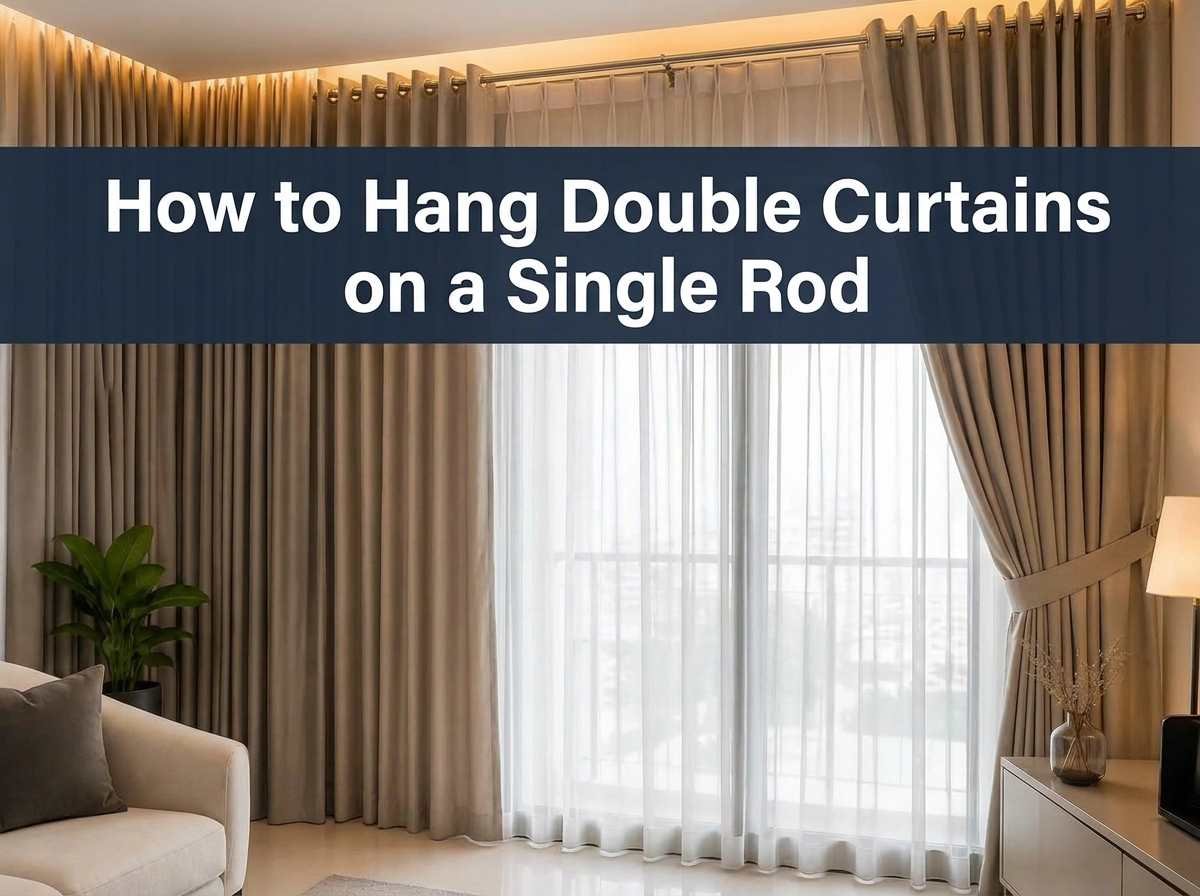
Layered curtains are everywhere in Dubai homes right now, and for good reason. Pairing a soft sheer with a heavier blackout or decorative panel gives you full control over light and privacy in one window. Many homeowners assume this look needs two separate rods, but a single rod can hold both layers if you use the right hardware and follow the correct order. Below is a complete, practical breakdown of how to do it properly, along with the mistakes that usually ruin the finished look.
What You’ll Need Before You Start
Gathering the right materials first saves you from stopping mid-installation.
- A sturdy curtain rod (metal is preferred over plastic for two layers of fabric)
- Two sets of curtains typically a sheer panel and a heavier or blackout panel
- Double curtain rings, clip rings, or layered hooks
- A measuring tape
- A drill, screwdriver, and wall anchors suited to your wall type
- A pencil or marker for bracket points
- A spirit level (optional, but helps keep brackets even)
If you’re working with Soundproof Curtains Dubai or another heavy fabric, add a center support bracket to your list the extra weight needs more than end brackets alone.
Do You Know? Top 10 Curtain Rod Installation companies in Dubai
Step 1: Choose the Right Curtain Combination
Decide on your two fabrics before you buy hardware. Most homeowners in Dubai pair a Sheer Curtains Dubai panel with a thicker blackout or decorative drape the sheer lets daylight filter through, while the heavier panel blocks light and adds privacy at night. Match the colors and textures to your furniture and wall tones so the layers feel intentional rather than mismatched.
Step 2: Pick a Rod That Can Handle Two Layers
A single rod carrying two curtains needs to be wider and sturdier than a standard one. Look for:
- A metal rod rated for at least double the weight of one curtain set
- A slightly wider diameter, so fabric slides without friction
- A center support bracket for windows wider than 1.5 metres
Skipping this step is the most common cause of a sagging rod within a few months.
Step 3: Get the Mounting Height and Width Right
This step is where most DIY installations go wrong, and it’s rarely explained clearly.
Height: Mount the rod 5–15 cm (2–6 inches) above the window frame. Going higher makes the ceiling look taller and the window appear larger — a trick often used in smaller Dubai apartments.
Width: Extend the brackets 10–20 cm (4–8 inches) beyond each side of the window frame. This lets both curtain layers open fully without blocking any light when pulled back.
Fabric fullness: Each curtain panel should be 1.5 to 2 times the width of the rod. For example, a 150 cm wide rod needs panels totalling 225–300 cm in width for soft, even folds. Flat, under-sized panels are the easiest way to make a layered curtain setup look unfinished.
Step 4: Install the Rod Brackets
- Mark bracket positions on the wall using your measurements from Step 3.
- Drill pilot holes sized correctly for your wall type concrete and drywall need different anchors.
- Insert wall anchors until flush with the surface.
- Screw the brackets in firmly, checking with a level that both sides sit at the same height.
- If using a center support bracket, install it at the midpoint before mounting the rod.
Must Read it: Where Should Curtain Rod Brackets Be Placed? Curtain Installation Dubai
Step 5: Hang the Sheer Layer First
The sheer curtain always goes on first because it sits closest to the window.
- Attach curtain rings or hooks evenly along the top of the sheer panel.
- Slide the rings onto the rod before the heavier curtain goes on.
- Push the sheer panel toward one side or the center, depending on your rod’s bracket layout.
Step 6: Add the Heavier Curtain in Front
Once the sheer layer is in place, hang the second, heavier panel using the same ring or hook method, positioning it in front of the sheer layer.
- Attach rings or hooks to the top of the heavier panel.
- Slide these onto the rod, in front of the sheer curtain’s rings.
- Space both layers evenly so they don’t tangle when opened or closed.
If you’re working with a pleated or Wave Curtains Dubai style, take extra care here the wave pattern needs to stay consistent across both layers, or the finished look will appear uneven from across the room.
Step 7: Lift the Rod Into the Brackets
Once both curtain layers are threaded on, lift the rod and settle it into the wall brackets. Most brackets have a small set screw tighten this so the rod doesn’t shift or rotate over time.
Methods for Hanging Two Curtains on One Rod
There’s more than one way to layer curtains on a single rod. Here’s how the common methods compare.
| Method | Best For | Difficulty | Notes |
|---|---|---|---|
| Double rings or layered hooks | Most standard windows | Easy | Sheer sits behind, heavy curtain sits in front on the same rings |
| Clip rings | Lightweight to mid-weight fabric | Easy | Fast to install; clips grip the fabric top instead of sewn loops |
| Hook-and-pleat method | Pleated or tailored drapes | Moderate | Hooks are inserted into the pleat stitching, then connected to rings |
| Double bracket, single pole | Wide or tall windows | Moderate | Uses one thicker rod but two-tier brackets for added support |
| Two rods mounted close together | Maximum flexibility | Advanced | Each curtain moves independently; needs more wall space and hardware |
Best Rooms for Layered Curtains
- Bedrooms: blackout layer improves sleep quality; sheer keeps the room bright during the day
- Living rooms: creates a softer, more finished look with flexible light control
- Home offices: reduces glare on screens while still allowing daylight in
- Dining areas: adds texture and depth without blocking natural light entirely
Common Mistakes to Avoid
- Using a rod that’s too thin or too short for two layers of fabric
- Overcrowding the rod, which makes the curtains hard to slide
- Mounting each layer at a different height, throwing off the symmetry
- Skipping the center support bracket on wide windows
- Choosing curtains with too little fullness, making the layers look flat
Cleaning and Maintenance Tips
Layered curtains need slightly more care than single panels since two fabrics share the same rod.
- Vacuum sheer layers regularly with a soft brush attachment to prevent dust buildup
- Wash or dry-clean each layer separately, following the fabric label
- Re-hang the sheer layer first when reinstalling, then the heavier panel, to keep the layering consistent
Conclusion
Hanging double curtains on a single rod isn’t complicated once you have the right hardware and follow the correct order sheer first, heavier panel second, with even spacing throughout. A sturdy, properly mounted rod and slightly oversized panels make the biggest difference between a layered look that feels polished and one that feels makeshift. And if you’d rather leave the drilling and measuring to someone else, a professional curtain installation Dubai service can get this exact setup done in one visit. With the steps above or with expert help you can get a clean, functional result whether you’re working with a small bedroom window or a wide living room opening.
FAQs
Can I really hang two curtains on one rod without buying a double rod?
Yes. A single sturdy rod with double rings, clips, or hooks can hold both a sheer and a heavier curtain, as long as it’s rated for the combined weight.
How much fabric fullness do I need for layered curtains?
Each panel should be 1.5 to 2 times the width of your rod for soft, even folds instead of a flat, stretched look.
How high above the window should I mount the rod?
Around 5–15 cm (2–6 inches) above the frame works best, making the window look taller and the room feel more spacious.
Do I need a center support bracket?
Yes, if your window is wider than about 1.5 metres or you’re using heavier fabrics like blackout or soundproof curtains it prevents the rod from bowing in the middle.
Which curtain should go closest to the window?
The sheer layer always goes closest to the window, with the heavier or blackout panel hanging in front of it.
Can this method work with pleated or wave-style curtains?
Yes, but you’ll need to space the hooks carefully so the pleat or wave pattern stays consistent across both layers.










)