

If you’ve lived in Dubai for more than one summer, you already know the problem: the sun doesn’t ease into your bedroom, it announces itself. By 5:30 AM in July, a west-facing window in Dubai Marina or a glass wall overlooking Sheikh Zayed Road can turn a cool bedroom into something closer to a greenhouse and that’s before you’ve even had coffee.
Blackout curtains sound like an obvious fix, but most people who buy them end up disappointed. They install a set, and light still creeps in around the edges, or the fabric fades and goes stiff within a year of desert heat. This guide walks through why that happens, what actually works in Dubai’s climate, and what you should realistically expect to pay.
Best Blackout Curtains For Bedroom Key Takeaways
- True blackout fabric blocks 99–100% of light; “room-darkening” fabric only blocks 80–90%, and the difference matters more than most buyers realize.
- Fit not fabric alone is usually why light still leaks in. Track width, pelmets, and side seals matter as much as the material.
- Custom-made curtains cost roughly 3–4x more than ready-made panels but solve the fitting problem that ready-made curtains almost never do.
- High-density thermal linings measurably reduce heat transfer through glass, which shows up as a lighter AC load and a slightly lower DEWA bill.
- Fabric lifespan in Dubai is shorter than in milder climates UV exposure and heat cycling break down cheaper coatings faster than the label promises.
Why Standard Curtains Fail in Dubai’s Climate
Most window fabrics sold as the best blackout curtains for bedrooms weren’t actually tested against Gulf-region sun intensity. UV exposure here is significantly harsher than in the European or North American markets these fabrics are often designed for, and the daily heat-to-AC-cool cycle stresses coatings in a way milder climates don’t.
Two things tend to go wrong within 12–18 months of installing budget blackout curtains in a Dubai apartment:
- The blackout backing starts to flake or bubble. Cheaper panels use a sprayed-on acrylic coating rather than a woven-in blackout layer. Heat causes that coating to separate from the base fabric over time, and you’ll start seeing pinpricks of light where none existed before.
- The fabric stiffens and loses its drape. UV-degraded polyester loses flexibility, which means the curtain no longer hangs flush against the wall or window frame creating new light gaps at the exact spots that used to be sealed.
This is the real reason people re-buy blackout curtains every year or two instead of once. It’s not that blackout curtains don’t work in Dubai it’s that most of what’s sold here wasn’t built to survive Dubai.
Fabric Options That Actually Hold Up
- Triple-weave polyester: A black yarn woven (not sprayed) between two outer layers. This is the most reliable mid-range option because the blackout layer can’t peel; it’s structurally part of the fabric. Best for apartments in high-rise buildings across Downtown Dubai, JLT, or Business Bay.
- Velvet with a blackout lining: Heavier, better at sound dampening, and holds its shape well over years of use. A common choice in villa master bedrooms in Palm Jumeirah or Dubai Hills, where the extra weight and tailored look fit the room.
- Faux linen with a separate thermal lining: A lighter, more textured look for people who don’t want the “hotel room” feel of solid blackout fabric. Works well but depends entirely on lining quality — cheap linings undercut the whole point.
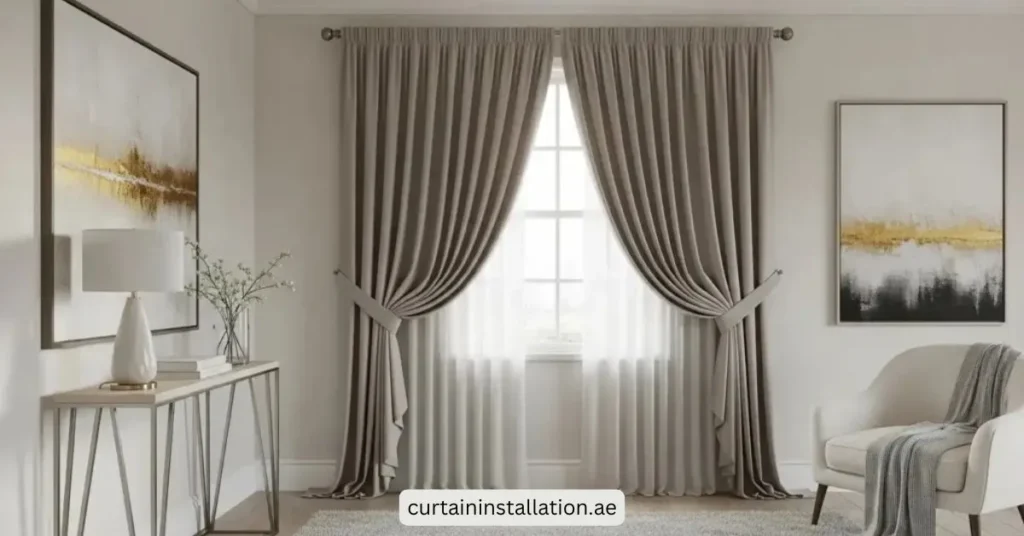
Custom-Made vs. Ready-Made: What the Table Doesn’t Tell You
| Feature | Custom Made-to-Measure | Ready-Made Panels |
| Sizing & Edge Fit | Cut to your exact window, zero edge gaps | Fixed sizes, almost always leaves side/bottom gaps |
| Fabric Durability | Heavier weave, UV-stable linings | Thinner coatings that peel under sustained heat |
| Heading Styles | Wave/S-fold, pinch pleat, motorized tracks | Basic eyelets or rod pockets only |
| Fitting | Professional track mounting | Self-installed, tracks often misaligned |
| Typical Lifespan (Dubai climate) | 5–8 years | 12–24 months before visible wear |
The lifespan row is the part most guides skip. A ready-made panel at AED 200 that needs replacing every year costs you more over five years than a single custom installation and that’s before counting the AC savings you lose while the fitting is imperfect.
For floor-to-ceiling glass, which is standard in most Dubai high-rises, ready-made panels almost never work. They’re manufactured to fit standard Western window heights (usually under 230cm), while Dubai apartment windows frequently run taller. The result is a curtain that stops short of the floor and stops short of blocking light no matter how good the fabric is.
How to Actually Stop Light Leaking Around the Edges
This is the step most people skip, and it’s the reason “blackout” curtains often don’t feel like blackout at all.
- Install a pelmet box. A fabric or wood box built over the curtain track closes the gap between the header and ceiling this is where the most overhead light escapes.
- Mount tracks 20–30cm beyond the window frame on each side. This lets the curtain fully cover the frame instead of just the glass, closing the vertical light gap.
- Use Velcro or magnetic side wraps along the return edge, pulling the fabric flush against the wall rather than letting it hang free.
- Let the curtain reach the floor, with a slight 1–2cm puddle. Light bounces off tile and marble flooring more than people expect, and a curtain that stops an inch short undoes a lot of the fabric’s work.
None of this is expensive to add if you’re already having curtains custom-fitted it usually adds a modest amount to the installation cost, not a separate large expense.
Heading Styles Worth Knowing
- Wave (S-Fold): Clean, even ripples on a ceiling-mounted track. The most common choice in modern Dubai apartments because it suits minimal interiors.
- Pinch Pleat: More traditional, stacks neatly when opened. Common in villa bedrooms with a more classic design language.
- Motorized tracks: Programmable to close automatically in early afternoon, which matters more in Dubai than almost anywhere else an unattended bedroom with open curtains at 2 PM in August is doing real, measurable damage to your AC bill.
Realistic Pricing in AED
- Basic ready-made panels: AED 150–300 per panel. Fine as a short-term fix, not a long-term solution for a Dubai-facing window.
- Custom made-to-measure (supply + installation): AED 600–1,200+ per standard bedroom window, including tracks and professional mounting.
- Motorized smart tracks: Add roughly AED 500–1,200 per track depending on the motor and whether it integrates with an existing smart home system.
- Pelmet boxes: Typically AED 150–400 extra per window if added at installation, more if retrofitted later.
Expect quotes to vary based on window height Dubai’s floor-to-ceiling glass means more fabric per panel than a standard-sized suburban home window elsewhere, which is the main reason quotes here run higher than what you’ll see referenced in non-UAE guides.
You Can Check: Blackout vs Sheer Curtains: Which Is Better for Dubai Homes?
Maintenance and What Shortens Curtain Life
Blackout curtains aren’t fully wash-and-wear. Machine washing agitates and can crack the thermal backing, especially on triple-weave and coated fabrics. A soft vacuum attachment for dust, combined with occasional professional dry cleaning, keeps the blackout layer intact far longer than home washing does.
Direct, prolonged sun contact particularly on west-facing windows is what ages fabric fastest. If your bedroom window gets harsh afternoon sun, a slightly heavier fabric grade or a UV-protective interlining is worth the extra cost; it’s usually cheaper than replacing curtains two years early.
Frequently Asked Questions
What’s the real difference between room-darkening and 100% blackout curtains?
Room-darkening fabric blocks roughly 80–90% of light, which still leaves a soft glow noticeable enough to wake light sleepers at sunrise. True blackout fabric uses a triple-weave construction or a bonded acrylic layer to block essentially all visible light, which matters most for shift workers, toddlers napping during the day, or anyone in a bedroom facing east.
Do blackout curtains actually lower DEWA bills, or is that overstated?
It’s a real effect, though the size depends on your window’s sun exposure. Direct sunlight through glass is one of the biggest sources of unwanted heat gain in a Dubai apartment. A properly fitted thermal lining reflects a meaningful portion of that heat back outward before it reaches the room, which reduces how hard your AC has to work to hold temperature particularly on west and south-facing exposures.
How long do blackout curtains realistically last in Dubai’s climate?
Budget ready-made panels often show visible wear flaking backing or stiffened fabric within 12 to 24 months of consistent sun exposure. Custom triple-weave or velvet-lined curtains, properly fitted and maintained, typically hold up for 5 to 8 years before needing replacement.
Is it worth paying for professional installation instead of doing it myself?
For standard windows, self-installation can work fine. For Dubai’s floor-to-ceiling glass, hiring experts for curtain installation in Dubai matters significantly more. Misaligned tracks are the single biggest reason blackout curtains underperform, and professional fitting typically accounts for the wider track mounting and pelmet integration needed to actually eliminate edge light.
Choosing the right blackout curtain for a Dubai bedroom comes down to two decisions: picking a fabric built for sustained heat and UV exposure, and getting the fit precise enough that light has nowhere left to leak through. Get both right, and the difference shows up in your sleep and your AC bill within the first week.










)